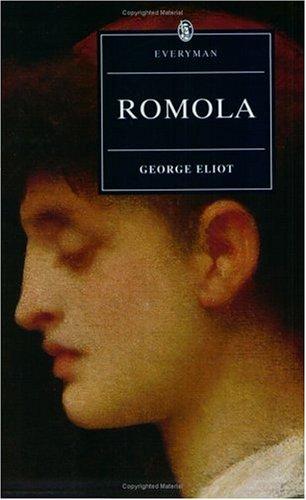
Romola is a historical novel set in Florence in the late fifteenth century, a time of political upheaval and religious fervour. The heroine, Romola, is the educated daughter of a blind scholar. Her marriage to Tito Melema, a charming Greek newcomer, brings her into the city's turbulent public life, which includes the influence of the preacher Savonarola. Eliot drew on extensive research to portray the era. The book examines duty, trust, ambition and faith, and the way private decisions have consequences in a time of historic change.
Quotes
Our deeds are like children that are born to us; they live and act apart from our own will. Nay, children may be strangled, but deeds never: they have an indestructible life both in and out of our consciousness;
Tito was experiencing that inexorable law of human souls, that we prepare ourselves for sudden deeds by the reiterated choice of good or evil which gradually determines character.
Chapter XXIII · Project Gutenberg #24020 (opens in a new tab)
Love does not aim simply at the conscious good of the beloved object: it is not satisfied without perfect loyalty of heart; it aims at its own completeness.
Chapter XXVIII · Project Gutenberg #24020 (opens in a new tab)
But veracity is a plant of paradise, and the seeds have never flourished beyond the walls.