Paradise Lost
by John Milton
First published 1667 · English · 326 pages
- Poetry
- Essays and criticism
- Religion and spirituality
- Biography and memoir
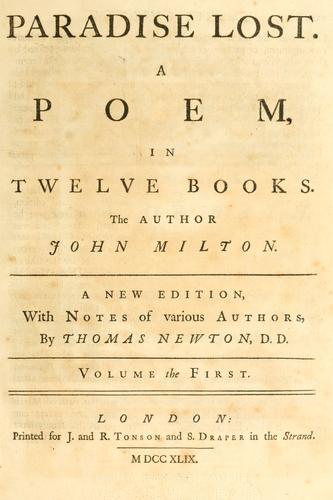
Paradise Lost is Milton's epic poem in blank verse, first published in 1667 and later arranged in twelve books. It retells the biblical story of the fall of humankind, beginning with Satan and the rebel angels after their defeat in heaven, and moving to the creation of the world and the life of Adam and Eve in Eden. Milton sets out to explain the ways of God to people, and the poem explores obedience, pride, freedom, love and temptation. Its vivid, complex Satan has fascinated readers for centuries. It is one of the central works of English poetry.
Quotes
The mind is its own place, and in itself Can make a Heav'n of Hell, a Hell of Heav'n.
Of Mans First Disobedience, and the Fruit Of that Forbidden Tree, whose mortal tast Brought Death into the World, and all our woe, With loss of Eden, till one greater Man Restore us, and regain the blissful Seat,
What in me is dark Illumine, what is low raise and support; That to the height of this great argument I may assert eternal Providence, And justify the ways of God to men.
Th’ infernal Serpent; he it was whose guile, Stirred up with envy and revenge, deceived The mother of mankind,