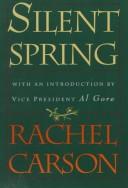
Silent Spring is a work of science writing about the dangers of synthetic pesticides, especially DDT, and the way they spread through soil, water, plants, animals and human bodies. Carson gathers evidence from scientists and field reports and sets it out in clear, often moving language. She opens with an imagined town where birdsong has fallen silent, then moves to the chemistry and ecology behind the warning.
The book argues that nature is a web of connections, and that poisoning one part can harm many others. It questions the confidence of industry and government in using such chemicals. Its publication stirred public debate, and it is widely seen as a founding book of modern environmentalism.
Quotes
The most alarming of all man's assaults upon the environment is the contamination of air, earth, rivers, and sea with dangerous and even lethal materials.
This is an era of specialists, each of whom sees his own problem and is unaware of or intolerant of the larger frame into which it fits.
Given time-time not in years but in millennia-life adjusts, and a balance has been reached. For time is the essential ingredient; but in the modern world there is no time.
The figure is staggering and its implications are not easily grasped-500 new chemicals to which the bodies of men and animals are required somehow to adapt each year, chemicals totally outside the limits of biologic experience.